
NATIONAL PAPER SHORTAGE DECLARED AS BALLOT ENTERS THIRD ROLL

Officials confirm no individual candidate is responsible for the quantity of paper required.
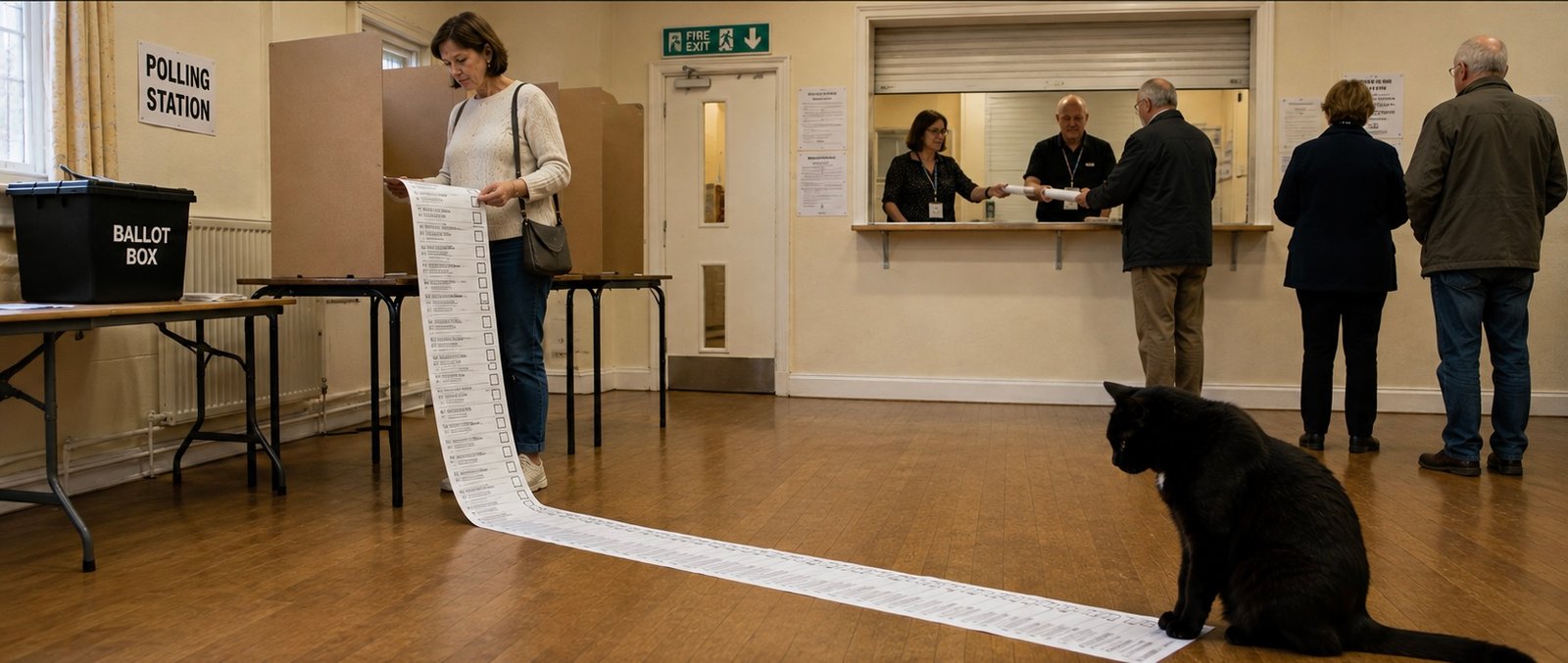
Inside a polling station, a voter studies an exceptionally long ballot paper that unrolls across the floor. Polling staff continue their work while Tac sits beside the paper and watches it. The printed names on the ballot are not readable.

A national paper shortage has been declared following the printing of ballot papers for a parliamentary by-election, officials confirmed yesterday.

The shortage was identified after the ballot paper entered its third roll. Officials stressed that the paper had been correctly printed, correctly delivered and correctly issued, and that no procedural failure had occurred at any stage.

Investigators have since examined whether responsibility could be attributed to any individual candidate. Subsequent enquiries established that no individual candidate was responsible for the quantity of paper required.

Asked whether responsibility might instead lie with all of them collectively, officials said the matter was being reviewed.

A spokesperson for the Office for Exit Assessment said the situation was proceeding as expected and that additional paper had been requested.

Officials said there was no reason to describe the situation as a crisis.

A meeting has been called to determine why.
ANNIVERSARY CONNECTION ESTABLISHED

Officials have not confirmed the connection. This newspaper regards that as significant.

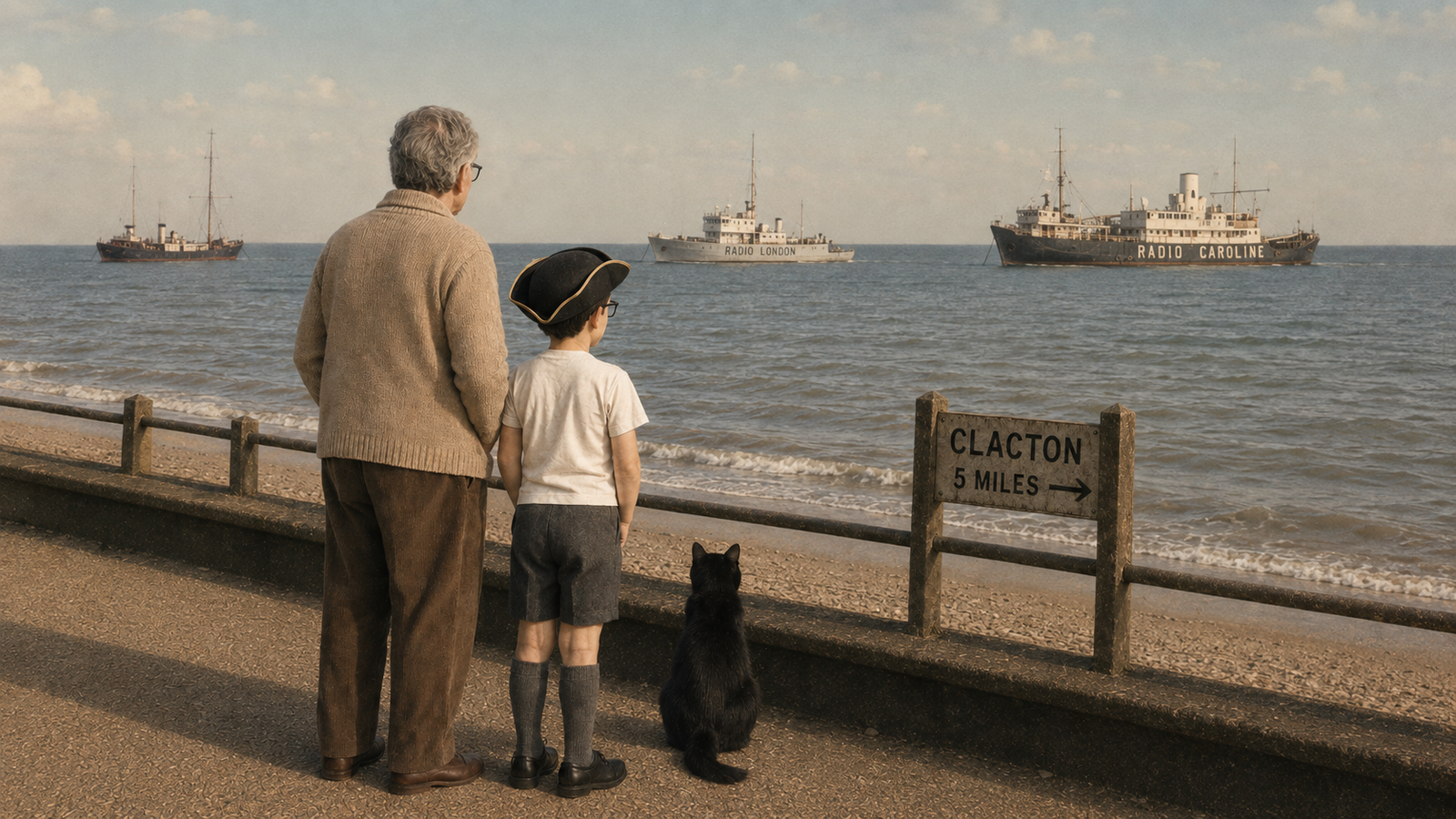
A deliberately aged 1967-style seaside photograph. An older man, a boy in a black pirate hat and Tac are seen from behind on the Frinton seafront looking towards three offshore radio ships. A weathered sign points right towards Clacton, five miles away.

Tomorrow marks fifty-nine years since the Marine Broadcasting Offences Act came into force, silencing the offshore radio stations that had broadcast to Britain from ships anchored off the Essex coast.

This newspaper can reveal that those ships were anchored off the very constituency now going to the polls, and that the two events fall within a single day of one another.

Readers will draw their own conclusions. This newspaper has drawn several.

The editor wishes to make clear that the ships were anchored off Frinton, and that in 1967 Frinton was not in this constituency at all. The seat did not exist until 2010. Before that the area formed part of Harwich, which had returned a member of parliament since 1885.

Our Speculation Correspondent notes that Frinton is in the constituency now, and that the boundaries were altered in the intervening period by persons unknown.

He further notes that officials have declined to explain why.

The editor wishes to make clear that the Boundary Commission is not persons unknown.

Our Speculation Correspondent has asked how the editor knows that.

RECORD OF THE WEEK

WHERE’S THE CLACTON MAN? — The Starmeroids (opens the music video in a new tab)

A missing-persons appeal in song form. Its subject is reported to be on television every night but never on the beach; the seafront, the pier and the caravan have all been searched without result. The Trot Poll confirms the single is rising, and that the gulls continue to see more of Clacton than the Clacton man does. Available on all major platforms. This newspaper is pleased to note that the question posed by the title is addressed, in part, elsewhere in today’s issue.